
TOURIST | 3-Kanal-Installation | 35:30 Minuten, Loop | 2026
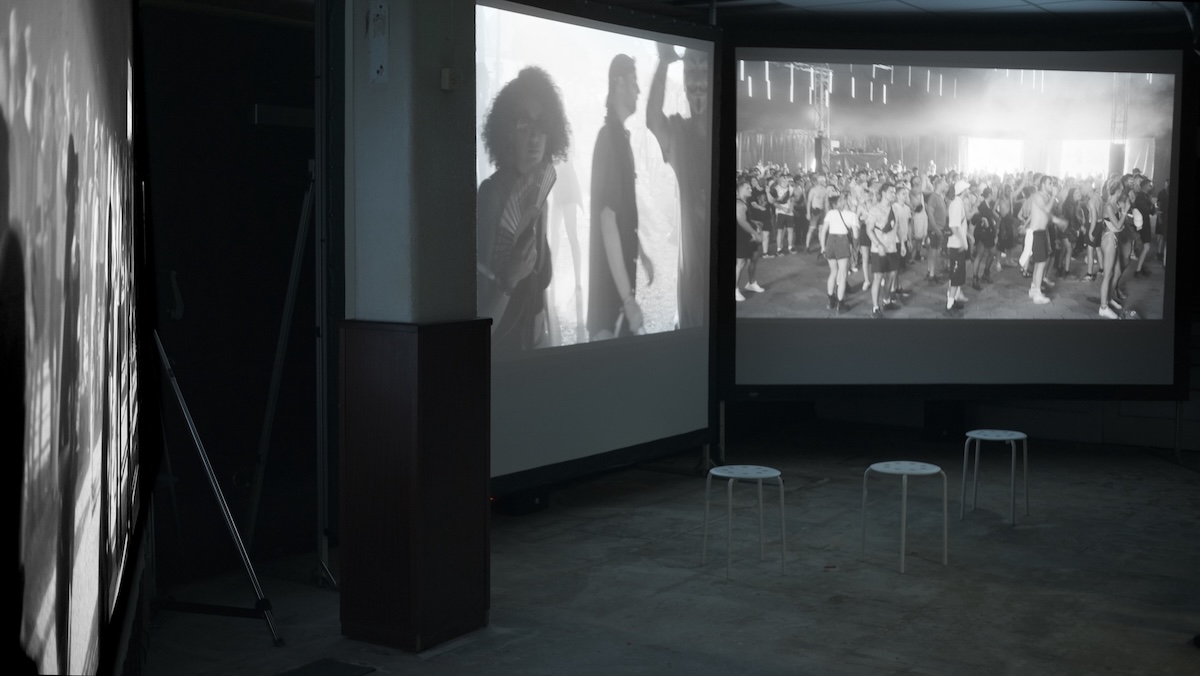
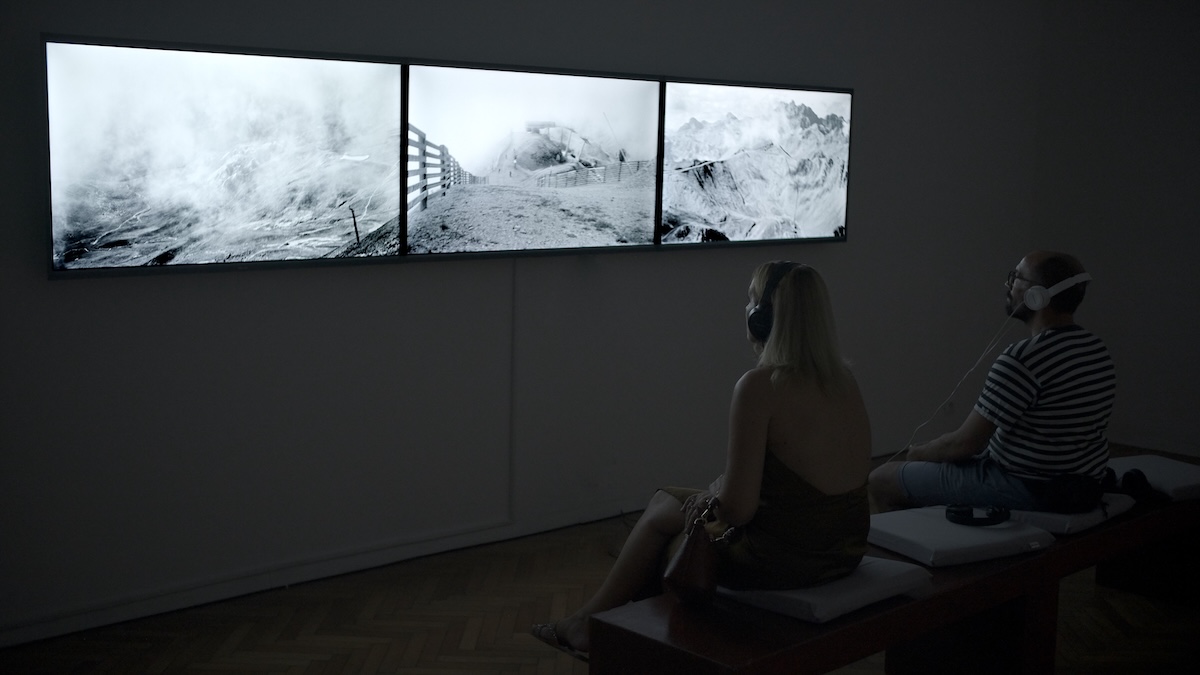
Das Künstlerduo Bedekovic/Grunsky erkundet mit seiner Videoinstallation TOURIST das Spannungsfeld zwischen individueller Sehnsucht und den Realitäten des Massentourismus. Die Arbeit reflektiert einen fundamentalen Widerspruch: Die Sehnsucht zu Reisen bei gleichzeitigem Wissen um enttäuschte Erwartungen und ökologische Folgen. Drei Projektoren bespielen drei Leinwände mit je einem Lautsprecher und der ihr zugeordneten Tonspur. Die Projektionen sind eigenständig, reagieren aber in der Schnittfolge aufeinander und entfalten ihre Wirkung im Zusammenspiel von Bild, Rhythmus, Ton und räumlicher Anordnung. Das Publikum sitzt, steht oder bewegt sich im Raum – ähnlich Touristen – und befindet sich zwischen Betrachtung, Reflexion und erneutem Aufbruch.
Fujifilm X-T3 | 1.85 :1 | s/w | Orte: Austria, Belgium, France, Germany, Italy, Luxembourg, Netherlands, Switzerland
Split Film Festival | Gewinner Grand Prix Media Arts Programme I Split, Croatia | 2026
artspace bremerhaven | Bremerhaven, Germany | 2026
Auszug Statement der Jurymitglieder Split Film Festival 2026 | Branka Benčić, Vuk Ćosić, Jasminka Babić
The work is offering a complex exploration of issues surrounding the representation of identity and place. It serves as a sophisticated study of the gaze, capturing the intersection of human behaviour and landscape representation. It views tourism and tourists not merely as a subject matter, but as a framing device through which codes of identity – such as images of place, national and other identities, and forms of belonging – are produced and reproduced. The focus often shifts away from individual tourists to the crowd as a collective body that moves, observes, poses, consumes, and participates in rituals of spatial commodification. In this way, the installation TOURIST creates an experience bordering on the uncanny: we recognise specific tourist situations and locations – whether distinct sites or metonyms for places – yet we observe them as settings for a collective ritual. The three-channel structure further fragments and multiplies the gaze, generating a sense of simultaneity and a certain unease in the face of scenes involving the mass movement of bodies, camera motion, and the consumption of space. Thus, the film transcends the conventional documentary portrayal of tourism to become a reflection on how we view places, prompting us to consider our own roles within the various spatial practices associated with tourists and tourism.